

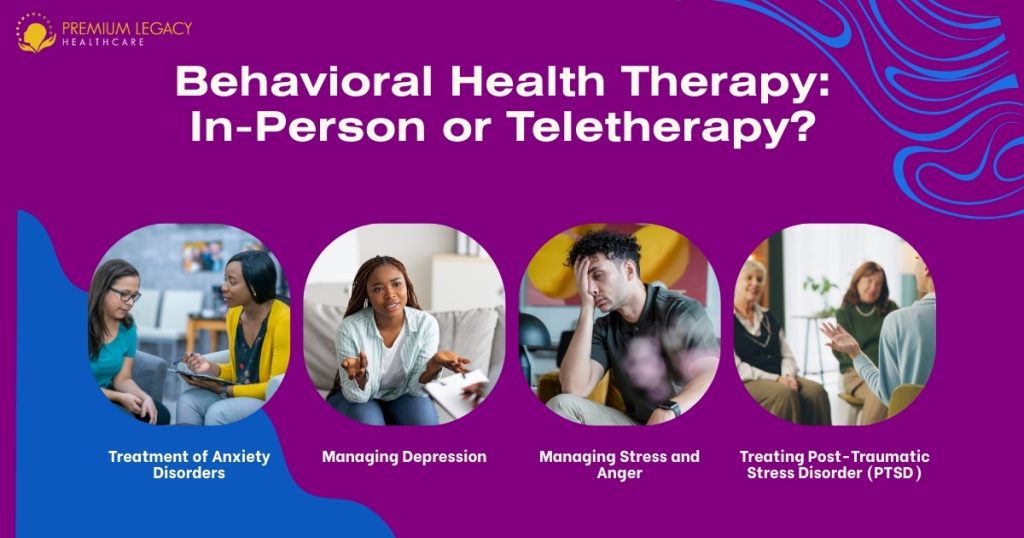
Anxiety, depression, and addiction-related concerns are major mental health challenges for individuals. According to a study, about 1 in 5 adults in the U.S. are experiencing mental health issues. Over the decade, behavioral health therapy has played a significant role in helping people suffering from these psychological obstacles.
Its two most common approaches are traditional in-person therapy and modern teletherapy. Let us discuss the features of both these teletherapy models so you can find out the most suitable one.
What Exactly Is Behavioral Health Therapy?
Behavioral therapy is associated with terms that include various techniques to change the dysfunctional behavior of individuals. Its motive is to eliminate unwanted behaviour and reinforce the desired one. Therapists who perform this therapeutic model work with patients to manage stress, improve coping strategies, and develop healthier behaviours. Especially those suffering from drug addiction or severe depression, gain structural guidance and support that improve their mental and overall well-being.
What Is Traditional In-Person Therapy?
In-person traditional therapy refers to face-to-face, offline sessions delivered by expert therapists. In this approach, you will be invited to meet the therapist individually or with your loved ones. Professional psychologists generally schedule sessions once a week for 30 or 60-minute time blocks. You can expect a free of distractions setting to have a private and calming environment.
What Is Teletherapy?
In today’s technologically advanced world, mental health professionals can provide online consultations via phone calls, chat sessions, and video conversations. These communication methods between a client and an expert counselor are simply understood as teletherapy. Smart Devices, like mobiles and computers, can be used to attend the sessions. However, it immensely needs a strong network and occasionally a reliable internet connection.
Key Differences between Teletherapy and In-Person Therapy
When choosing a behavioral health therapy model, you need to have an idea about the key differences between in-person therapy and teletherapy. It assists you in selecting the option that best supports your emotional and psychological needs. Both methods play a key role in delivering effective mental health care. But they differ in access, delivery, and experience of how sessions work. Let’s dive into:
1. Accessibility and Convenience
In-person therapy requires both the client and therapist to be present in the same location to create a face-to-face discussion. However, sometimes regular sessions become difficult due to high transportation costs, travel time, or scheduling challenges.
On the other hand, the behavioral health therapy approach that selects the teletherapy process offers access to therapists and clients to connect from different regions of the world. For those individuals with a busy schedule or who live in a remote area, it is highly helpful.
2. Privacy and Comfort
In-person therapy offers a professional and controlled environment designed specifically to maintain privacy and minimize distractions. during behavioral health therapy.
In contrast to this, teletherapy feels more comfortable because sessions can be attended from as per the individual‘s favorable space or time. This comfort can encourage openness where digital privacy and secure platforms are used.
3. Connection and Engagement
In-person therapy allows counsellors to observe non-verbal cues in a better way. Most often, it supports experiential approaches like movement-based techniques or art therapy, which can enhance patients’ emotional expression and engagement.
Contrary to this, therapists generally have limited ability in teletherapy to observe full body language, which is a vital part of professional behavioral health services. However, a strong therapeutic relationship can still be developed with clear communication and consistency.
End Notes: Which Is More Suitable?
You can easily find both online and offline modes for behavioral health therapy due to increasing mental health awareness. Depending on your needs, suitability, and goals, the best one among these can vary.
Premium Legacy Healthcare offers facilities for both inpatient and outpatient therapeutic models, as per the client’s choice. We have expert counsellors from the industry who support your mental wellness journey with comprehensive care and support. Call our team today and live a drug-free and stress-free life again.