

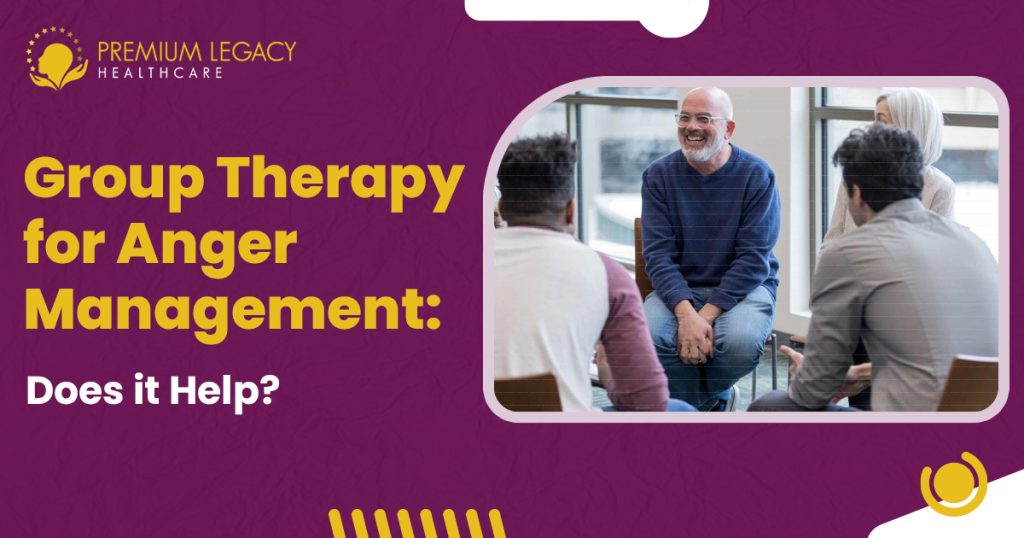
Anger outbursts are a common behavioral issue among many. Most people don’t even realize when their bottled-up emotions begin to overflow, hurting themselves and others around them. This becomes worse in a public setting, as being in a group tends to trigger rage in humans more easily. But psychiatric therapists often recommend group therapy for anger management. How come?
Multiple studies show that group therapy might be more effective in anger management and PTSD recovery than one might expect. It can be an effective tool in helping people build new connections and turn aggression into awareness. When in a group, you are not simply left on your own to ruminate on negativity. You get to speak out loud about what’s on your mind and listen to what others have to say. With shared thoughts, it becomes more than just a therapy session— an actual healing experience, for everyone involved.
Let’s take a look into how group therapies for anger management work and whether they help or not.
How Does Group Therapy Work?
Similar to individual therapy sessions, people get to learn how to recognize, control, and respond to anger in group therapy. However, unlike in individual therapy, they also learn communication and emotional regulation during conversations. To effectively manage anger, one first needs to address the underlying cognitive and behavioral factors behind it. Learning how to do so isn’t exactly easy. After all, anger management is a gradual process that takes time and patience. In a group therapy session for anger management, you’re likely to acquire:
1. Communication Skills
A surprising number of people don’t actually know how to communicate with their peers. They accidentally end up unloading all their thoughts onto others as they cannot express them normally. Group therapy focuses on improving communication skills and letting people bond over shared experiences. This way, people can talk things out instead of jumping to an aggressive interaction.
2. Problem-Solving Skills
Critical-thinking and problem-solving are crucial for managing anger. People tend to get angry when they don’t understand how to resolve a problem or an argument. One must learn to recognize the underlying issues to get to the root of it. Only then can they develop strategies to address them without raging over the issue. In group therapy, you can brush up on your problem-solving skills by tackling issues and utilizing teamwork.
3. Emotional Regulation
Emotional overflow often leads to anger outbursts. Group therapy sessions teach people how to understand and regulate their emotions. You learn how to stay calm even in situations that could trigger your rage, gaining increased self-awareness. Researches have proven that group therapy can raise the emotional quotient (EQ), empathy and social skills of people.
4. Cognitive Restructuring
The cognitive patterns of our brains can be difficult to change. They may remain underdeveloped when under traumatic or stressful experiences. Group therapies aim to develop cognitive abilities like reasoning further, so that people can learn how to control their reactions in challenging situations. They learn to reframe their thoughts and express their emotions in a more constructive and positive way.
5. Coping Mechanisms
Sometimes you need an outlet for your budding anger to be able to calm down. Therefore, you must find better ways to channel that anger instead of letting it overflow. Many get into substance-abuse and alcoholism while trying to cope with anger, worsening their condition. Group therapy encourages people to find healthy coping mechanisms for anger management that help blow off some steam without hurting anyone. Exercise, self-care routine, or creative hobbies could be your easy coping mechanism instead of addictions.
6. Stress and Anxiety Management
Anger and negative thoughts often stem from anxiety or stress buildup. Medications can only do so much to help. People need guidance and support to deal with their stress and anxiety issues. Group therapies also help teach about anxiety and stress management techniques, along with anger management. While being surrounded by strangers can be daunting, people can overcome their anxiety issues if provided with a supportive environment.
Effectiveness of Group Therapy in Anger Management
You may ask, ‘Just how effective is group therapy for managing anger?’ The answer is —very. Roughly 75% of individuals who attend group therapy sessions show significant progress in stress and anger management. For those who willingly participate, progress is generally far quicker. Group therapy utilizes cognitive-behavioral therapy (CBT) to transform thinking patterns and improve overall behavioral health. The results are more often satisfactory than not.
Final Thoughts
Dealing with anger issues on your own can be arduous. By providing a sense of community and support to rely on, group therapy makes anger management easy. It helps develop the skills necessary to communicate and resolve situations before they can escalate.Contemplating whether therapy will work for you? Then don’t hesitate anymore. At Premium Legacy Healthcare, get complete holistic care for your mental wellbeing with individual and group therapy.